%20(1).png)

Bad Posture Doesn't Exist For Low Back Pain & Sciatica
Look, I know you’ve been told your entire life to “sit up straight” or “stop slouching,” and every physical therapist and chiropractor in the world has told you that your posture, imbalances, or flexion (bending your spine forward) is bad for you back…
I know you’ve probably been told:
- Bending your spine forward (flexion) is dangerous
- Slouching is bad for your back
- Deadlifting is dangerous
- Spinal discs are fragile, like jelly donuts
- Bending makes disc herniations worse
- A lot of other scary things that make you afraid of your back…
But let’s take a look at peer-reviewed research and see if this story holds up. Sound fair?
Oh, and before you assume I’m going to tell you that “pain is all in the brain,” the truth is that pain is complex. The brain has a big role, but we can’t ignore physical factors either. Let’s try to strike a balance by evaluating research.
If you like videos, here's a video summary of this article:
In this article we’ll cover:
- Bad posture doesn’t exist
- Sensitive doesn’t mean dangerous
- Popular “experts” are wrong
- Standing isn’t the answer
- All postures can be either good or bad, depending…
- Lifting is safe (even with flexion)
- What DOES cause back pain & sciatica?
- What to do
Sensitive Does Not Mean Dangerous
First let’s acknowledge something obvious: With chronic pain, many of you know for a fact that certain postures, positions, or activities reliably trigger the pain.
So… it’s normal to assume that the posture or movement is causing the pain.
And in a sense that’s true.
But just because a position or movement triggers pain, that does NOT mean it’s dangerous.
“Hurt doesn’t equal harm.”
It can be sensitive, inflamed, and irritable, but if you assume that anything that causes pain is dangerous, we fall into the fear-avoidance cycle:
- Pain triggers overprotective behavior
- This leads to less activity, which makes you weaker
- Inactivity leads to more pain, and the cycle repeats
Sensitive does not mean dangerous. And avoiding sensitive positions forever is not the goal, instead we want to gradually ease back into full range of motion, full-body activities.
The Popular “Experts” Are Wrong
Let’s look at one of the most comprehensive research reviews ever conducted on posture and pain.
This paper is a systematic review of systematic reviews, meaning it studied 41 other papers, each of which was analyzing tons of different individual studies. [1] It's like the Russian doll of research papers.
In other words: it's looking at ALL of the available research on posture and low back pain, all at once.
The conclusion? There’s no evidence showing that certain postures cause back pain.
Out of 41 reviews, there was no proof that prolonged sitting, standing, or spinal curvature CAUSES low back pain. Not "limited evidence." Not "mixed findings." No proof.
The only thing that showed a strong relationship to back pain was having physically demanding work — meaning high force, high load, repetitive heavy lifting.
❌ Things (mechanical factors from this paper) that DO increase the risk of back pain:
- Heavy manual labor
- Note: since I know some people will see this and think “ah ha! I knew it! Lifting is bad!” You need to know that other populations who lift weights see healthier discs, fewer herniations, and less low back pain (all a subject for another article). The reason is rest and recovery! Lifting weights in the gym is one of the best things you can do for your body IF you have appropriate rest and recovery in between. Manual labor jobs don’t allow this, so the job leads to overtraining and injury.
- The activity is not dangerous, the lack of breaks, recovery, and variation is bad.
- Note: since I know some people will see this and think “ah ha! I knew it! Lifting is bad!” You need to know that other populations who lift weights see healthier discs, fewer herniations, and less low back pain (all a subject for another article). The reason is rest and recovery! Lifting weights in the gym is one of the best things you can do for your body IF you have appropriate rest and recovery in between. Manual labor jobs don’t allow this, so the job leads to overtraining and injury.
- Jobs with prolonged whole-body vibration from machines
Not posture. Not alignment. Not the angle of your pelvis.
So, just to be clear, you don’t need to be worried about:
- Sitting
- Standing
- Bending or twisting
Repeat after me: Bad posture doesn’t exist. No single position causes chronic pain.
Spoiler alert - any posture is going to be irritating after a while, so building in more movement variety throughout the day is your best strategy.
The only bad position or movement is one you aren’t prepared for, or one you can’t get out of.
You’re probably still worried about lifting and rounding your back, so let’s address this right now. Lifting with a rounded back does not increase your injury risk. [13] We’ll dive more into this later.
Standing Desks Won't Save You Either
Remember when standing desks became popular?
We were told that “sitting is the new smoking,” and that sitting was destroying our spines.
So we got standing desks and stood all day instead.

Guess what happened?
People had just as much pain standing as they did sitting. The research confirmed this. Switching from sitting to standing didn't improve low back pain. [11]
And that's because neither sitting nor standing is inherently bad. Any position becomes problematic when you stay stuck in it for hours with no variety and no movement. It's not the posture - it's about being sedentary.
The real solution isn't to find the "correct" posture and hold it forever.
The real solution is to switch positions frequently, take movement breaks, and stop treating your body like it's made of glass.
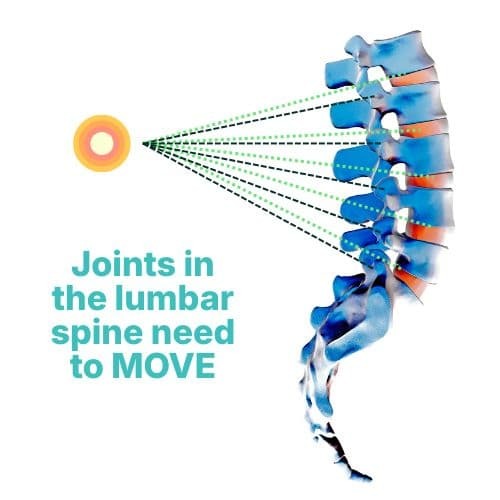
A simple argument that debunks the neutral spine dogma:
If the lumbar spine has over a dozen different joints in it - this is proof that this area is designed to move. Otherwise it would be fused like the sacrum.
- The health of a joint is largely determined by its ability to MOVE through a full range of motion
- Why would we say that one position in this RANGE of motion is the ONE “good” position?
- If neutral is the only “good” position, are we supposed to keep our spines in neutral all day, every day, no matter what?
- What consequences would this have?
- ❌ Increased muscle guarding
- ❌ Decreased bloodflow, oxygenation, and nutrient delivery
- ❌ Decreased disc and joint hydration
- ❌ Atrophy/weakness in the lumbar spine & muscles
- ❌ Increased pain & disability
- What consequences would this have?
Joints are meant to move. Sure, you should have the ability to brace your core when needed, but also the ability to bend and rotate when needed without issue.
ALL Postures Are Good — and ALL Postures Can Be Bad
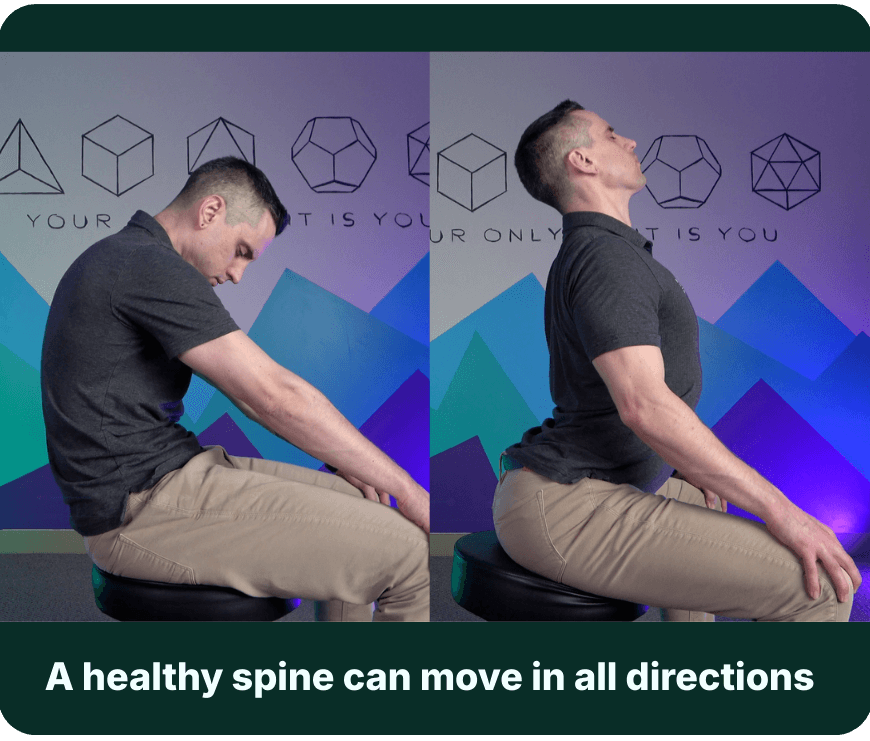
Here’s another way of looking at it: ALL postures and positions can be good, and ALL postures can be bad.
Any posture will eventually cause discomfort if you hold it long enough without a break. Even what we'd call "textbook perfect posture" will create pain if you're frozen in it all day. So in that sense, all postures are bad if you overdo it.
On the flip side, the health of your body is partly determined by your ability to move all of your joints through their full range of motion. Rounding your spine? That's spinal flexion, and it's a healthy, normal movement your body is designed to do. Twisting? Rotation is supposed to happen. A healthy spine should rotate. If you CAN'T flex or rotate, THAT is a problem — not the other way around.
You might think rounding the spine is "bad posture," but I'd be far more concerned if you couldn't flex your spine at all. Same with twisting. A healthy spine should rotate. If you can't, THAT's the real red flag.
And for the record, spinal flexion is important in aiding the nutrition of the spinal discs because it alters fluid content, acting like a pump to help nourish the disc. [12]
So I’m not suggesting that staying in flexion all day long is wise. I’m saying regularly switching postures, and including flexion as one of those positions - is not only safe but is GOOD for the spine.
Motion is literally lotion for the discs and joints.
The actual problem isn't any particular posture. It's doing too much of ONE posture, with no variety, no movement, no breaks.
Then the real problem is becoming afraid of certain positions, which leads to overprotective guarding, lack of movement, avoidance, stress & health anxiety, weakness, and ultimately more pain.
Now Let's Talk About Lifting
You've heard it a thousand times: "lift with your legs, not your back." This advice is so deeply embedded in our culture that most people treat it like a law of physics. Break it, and your spine explodes. We've all been told this. It's completely wrong.
Short story, this systematic review and meta-analysis shows that lifting with a rounded spine (flexion) does not seem to increase the risk of injury or pain. [13]
Now let’s examine the biomechanics and additional research to understand WHY spinal flexion does NOT increase the risk of injury while lifting…
A Vertebral Implant Study
Which lifting posture would YOU guess puts the least stress on the spine?
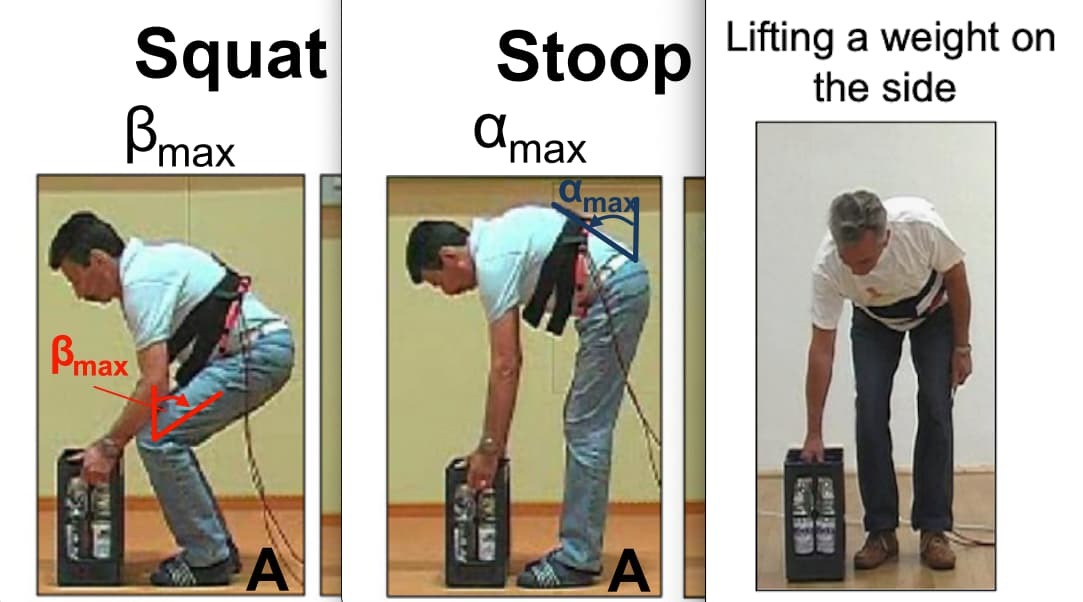
Most people would guess that squat lifting (“lifting with your legs” as people think of it) is the safest, and that stoop lifting or lifting off to the side which involves bending, lifting, and a little twisting all at the same time would be the most dangerous.
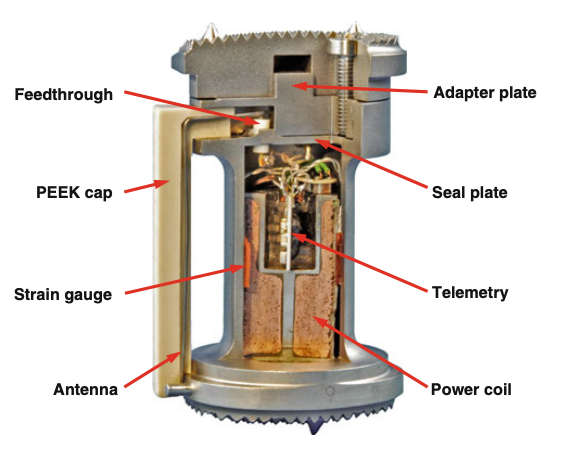
Here's where things get wild. A group of researchers took patients who had previously suffered a vertebral body fracture and needed a spinal implant — and they installed force-sensing devices directly into the spine that could measure compression and shear forces in real time. Then they had those patients lift objects in different ways and measured exactly what was happening inside the spine. [2]
What did they find? Only a 4% difference in spinal force between squat lifting (legs) and stoop lifting (back). Not much.
Essentially, there’s no real difference in your spine between stoop vs. squat lifting.
Both techniques produced comparable spinal loads, meaning neither is meaningfully safer than the other from a biomechanical standpoint.
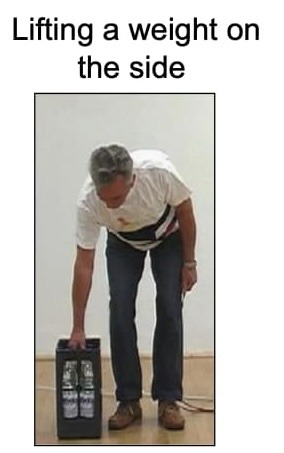
But here's the part that really blew me away: they also had participants lift a weight off to the side…
The kind of lift that involves bending, lifting, and twisting all at once, the kind of lift every trainer and doctor has told you is basically going to destroy your spine.
What happened?
Lifting laterally actually produced 14% LESS force on the spinal implants than lifting an object straight in front of the body. [2]
Let that sink in. The "dangerous" lift was safer than the "safe" lift.
Additional biomechanical research comparing squat and stoop techniques further confirmed this — there's no evidence the squat technique prevents low back pain compared to stooping. [3]
And a comprehensive 2021 motion capture study found that stoop lifting (the same movement as a deadlift) actually produced significantly LOWER compressive and total lumbar loads than squat lifting. Yes, the shear loads were generally a little higher in stoop lifting, but then anterior shear was higher in squat lifting [4]
The point is that in real human beings, we have many studies showing that the deadlift movement pattern is perfectly safe compared to a squat lifting pattern for daily life.
Oh, and Keeping a "Neutral Spine" While Lifting? Basically Impossible.
There's another layer to this that most people don't know. One of the big arguments for "lift with your legs" is that it lets you maintain a neutral spine and avoid bending the lumbar vertebrae.
Here's the catch: that's not physically possible. A systematic review found that greater lumbar spine flexion during lifting is NOT a risk factor for low back pain onset or persistence. [5]
This makes sense, because the spine is going to flex whether you want it to or not.
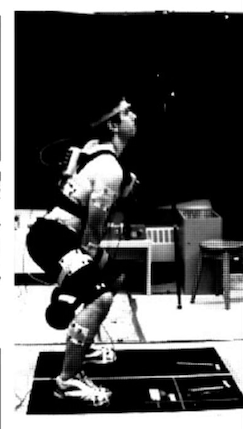
Here's another important study: McGill (yes, the “flexion is dangerous and you should never bend your spine” Stuart McGill) measured spinal motion during kettlebell swings on participants who were specifically cued to keep a neutral spine. Even with that cue, the lumbar spine flexed an average of 26 degrees at the bottom of the swing. [6]
The crazy part is if you look at the image of the man (above) at the bottom of his kettlebell swing and ask yourself, “Is he doing a good job maintaining a neutral spine?” You’d probably say yes! He LOOKS like he has a neutral spine, but in reality, that’s about 26 degrees of flexion!
So not only is it impossible to keep a neutral spine, but outside observers (even trained professionals) are notoriously bad at being able to judge what is neutral and what’s not…
And research on squatting shows that even when you use 'proper' technique — knees bent, trying to keep the back neutral — the lumbar spine still flexes an average of around 40 degrees. [5] The spine is going to bend when we lift, so rather than fight it, we might want to prepare for it.
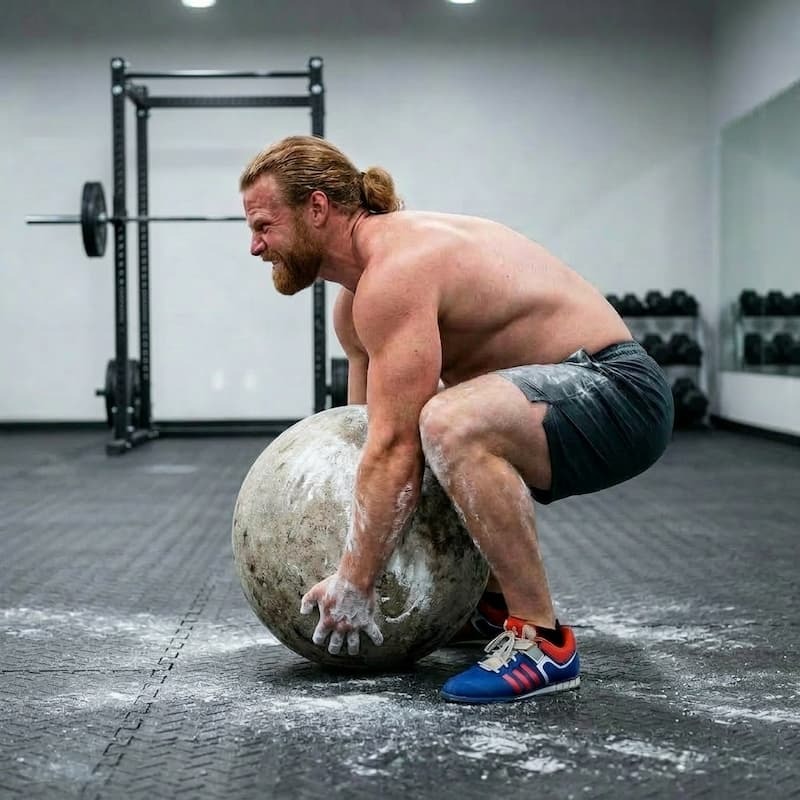
In fact, spinal flexion can make us stronger and more efficient while lifting.
Research shows that a flexed spine during lifting may actually produce greater strength and efficiency. [7]
Psst — stoop lifting (deadlift pattern) also turns out to be more metabolically efficient. When researchers compared oxygen consumption during stoop vs. squat lifting, squat lifting required significantly more oxygen to produce the same amount of work. [8] Your back might just be smarter than your trainer.
What IS the Cause of Back Pain, Then?
If posture isn't the enemy, what is?
To really understand chronic back pain, you have to think about biological, psychological, AND social factors.
That's the biopsychosocial model, and it's the gold standard framework in pain rehab science today. Pain is not a purely mechanical problem. It's a complex output of your nervous system shaped by your biology, beliefs, stress, sleep, history, and your environment.
But when it comes specifically to posture and positions — the answer isn't any particular posture. It's NOT MOVING ENOUGH.

Posture isn't the problem. Sedentary behavior is the problem.
A major systematic review and meta-analysis confirmed that sedentary behavior is associated with increased risk of low back pain — in adults, prolonged sitting time alone increased the odds of LBP by 42%. [9]
Also of note from the same study is that smoking and excess body weight were also significant risk factors for low back pain. [9]
Think about it. Sitting at breakfast, sitting in the car, sitting at your desk, sitting on the couch — all day, every day, in essentially the same position, with no variation, no breaks, no movement. Of course your back is hurting. It's not because sitting is inherently evil. It's because your body wasn't designed to do just one thing for 10 hours a day.
Your body needs to MOVE. Movement is medicine.
Longitudinal research on sedentary behavior and LBP echoes this — the association isn't about any one posture, it's about the overall pattern of how little we move. [10]
Zoom Out: The Whole-Person Picture
Chronic pain is multifactorial. I can't say that often enough.
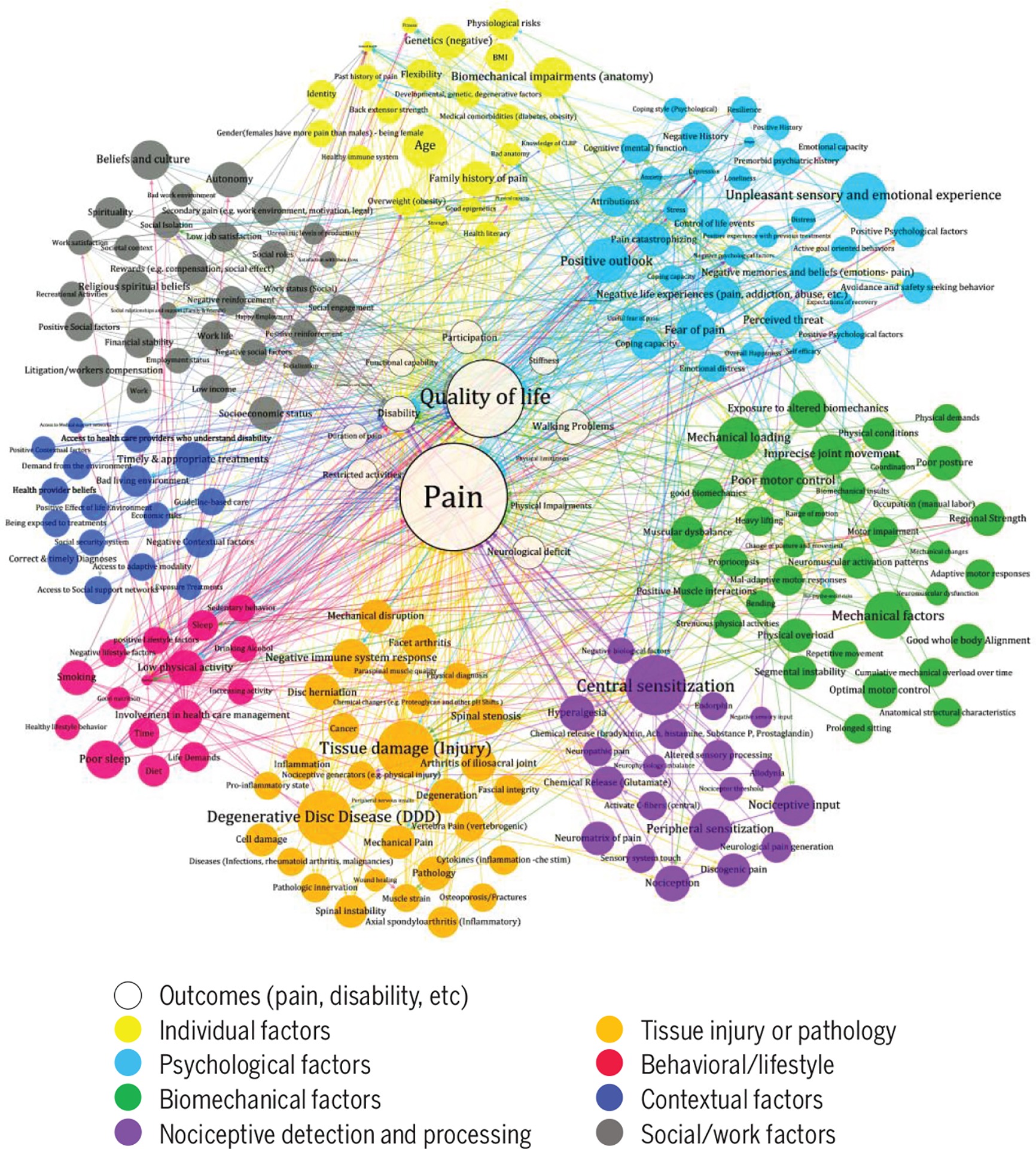
I can’t cite this study enough. [14] The image above shows how complex chronic pain really is.
While the mechanical mythology around posture gets most of the attention, what most people overlook is how the rest of their life is impacting their pain. Mental health, fear, stress, sleep quality, nutrition, social connection — all of these matter enormously. Depression is at least as likely to be a major contributor to your back pain as a disc herniation or anything on your MRI. [15] Chronic stress physically lowers your pain threshold and keeps your nervous system in a state of hypervigilance. Stress increases the risk of chronic pain by 180%
So yes, get out of the chair more. But stop obsessing over your posture.
More importantly, zoom out. If you're exhausted, anxious, isolated, and running on three hours of sleep, no amount of neutral spinal alignment is going to fix your pain. This is why truly effective rehab has to address the whole person — not just the spine.
That's the foundation of the Beyond Back Pain program. Exercise, yes — but also pain science education, sleep, stress, mindset, and movement that you actually enjoy and can sustain. Because motion is lotion. But movement that you do consistently, sustainably, and without fear? That's actual medicine.
What to Do Instead
Okay, so if obsessing about posture is off the table, what should you actually do? Here's what the research (and years of clinical practice, plus my own personal rehab journey) points to:
Get a sit/stand desk if you work at a desk.
Not because standing is better than sitting, but because switching frequently is better than either. Personally, I switch positions every 10–20 minutes. Variation is the goal, not a single "correct" position.
Build in movement snacks.
Every time you get up for water, a snack, or the restroom — you just did a squat. Use that as your cue. Do 10 more squats (or pick any movement that feels safe), then carry on with your day. These tiny bursts of movement scattered throughout the day add up significantly.
Give yourself permission to relax.
Slouch if it makes you comfortable. Lean to one side, then switch. Cross a leg. Cross the other. Just don't stay frozen in any one position. There's NO SUCH THING AS PERFECT POSTURE. Stop trying to force it.
Don't be afraid to bend and lift.
Once you slowly work up to it through a solid exercise progression over time…
Lift the groceries how you want to. Pick things up off the floor. Bend forward and twist as needed. Your spine is strong, and the research proves it. Avoiding movement out of fear makes the underlying problem worse — it keeps your nervous system in defense mode and weakens the very muscles you need for recovery.
Stop overthinking it.
Address the whole picture.
Reduce fear. Work on sleep. Manage stress. Do activities you actually enjoy. If fear and anxiety are central to your pain experience (and for a lot of people they are, even when they don't realize it), read this article next. It'll reframe your entire understanding of what pain is and where it comes from.
Some of you want a personalized step-by-step plan.
We can write you a personalized plan if you’d like our guidance.
Just Join the FREE community first, and from there it’s easy to find information about our Beyond Back Pain Program.
The Bottom Line
You've been mislead about posture. There's no single "bad" position that's destroying your spine. The research is clear: no single posture causes low back pain. Lifting "with your back" isn't meaningfully more dangerous than squatting. Bending, twisting, and flexing are things a healthy spine is designed to do.
The problem isn't how you're sitting. The problem is that you're not moving enough — and that fear of movement may be making everything worse.
Stop chasing perfect posture. Start moving more. Get out of defense mode. And if you're ready for a structured, evidence-based program that addresses the whole picture — not just the mechanical stuff — check out the Beyond Back Pain program. [link to: Beyond Back Pain program page]
Your spine is stronger than anyone has ever given it credit for. It's time to start acting like it.
This article is for educational purposes only and does not constitute medical advice. Always consult a qualified healthcare provider before making changes to your treatment plan.
References
- Swain CTV, Pan F, Owen PJ, Schmidt H, Belavy DL. No consensus on causality of spine postures or physical exposure and low back pain: A systematic review of systematic reviews. Journal of Biomechanics. 2020;102:109312. doi:10.1016/j.jbiomech.2019.08.006. PMID: 31451200. View on PubMed
- Dreischarf M, Rohlmann A, Graichen F, Bergmann G, Schmidt H. In vivo loads on a vertebral body replacement during different lifting techniques. Journal of Biomechanics. 2016;49(6):890-895. doi:10.1016/j.jbiomech.2015.09.036. PMID: 26603872. View on PubMed
- van Dieën JH, Hoozemans MJ, Toussaint HM. Stoop or squat: a review of biomechanical studies on lifting technique. Clinical Biomechanics. 1999;14(10):685-696. doi:10.1016/S0268-0033(99)00031-5. PMID: 10545622. View on PubMed
- von Arx M, Liechti M, Connolly L, Bangerter C, Meier ML, Schmid S. From stoop to squat: a comprehensive analysis of lumbar loading among different lifting styles. Frontiers in Bioengineering and Biotechnology. 2021;9:769117. doi:10.3389/fbioe.2021.769117. PMID: 34805121. View on PubMed
- Potvin JR, McGill SM, Norman RW. Trunk muscle and lumbar ligament contributions to dynamic lifts with varying degrees of trunk flexion. Spine (Phila Pa 1976). 1991;16(9):1099-1107. doi:10.1097/00007632-199109000-00015 View on PubMed
- McGill SM, Marshall LW. Kettlebell swing, snatch, and bottoms-up carry: back and hip muscle activation, motion, and low back loads. Journal of Strength and Conditioning Research. 2012;26(1):16-27. doi:10.1519/JSC.0b013e31823a4063. PMID: 21997449. View on PubMed
- Mawston G, Holder L, O'Sullivan P, Boocock M. Flexed lumbar spine postures are associated with greater strength and efficiency than lordotic postures during a maximal lift in pain-free individuals. Gait and Posture. 2021;86:245-250. doi:10.1016/j.gaitpost.2021.03.004. PMID: 33799053. View on PubMed
- Hagen KB, Hallén J, Harms-Ringdahl K. Physiological and subjective responses to maximal repetitive lifting employing stoop and squat technique. European Journal of Applied Physiology and Occupational Physiology. 1993;67(4):291-297. doi:10.1007/BF00357625. PMID: 8299594. View on PubMed
- Baradaran Mahdavi S, Riahi R, Vahdatpour B, Kelishadi R. Association between sedentary behavior and low back pain: a systematic review and meta-analysis. Health Promotion Perspectives. 2021;11(4):393-410. doi:10.34172/hpp.2021.50. PMID: 35079583. View on PubMed
- Alzahrani H, Alshehri MA, Alzhrani M, Alshehri YS, Al Attar WSA. The association between sedentary behavior and low back pain in adults: a systematic review and meta-analysis of longitudinal studies. PeerJ. 2022;10:e13127. doi:10.7717/peerj.13127. PMID: 35391924. View on PubMed
- De Carvalho D, Greene R, Swab M, Godwin M. Does objectively measured prolonged standing for desk work result in lower ratings of perceived low back pain than sitting? A systematic review and meta-analysis. Work. 2020;67(2):431-440. doi:10.3233/WOR-203292 View on PubMed
- Adams MA, Hutton WC. The effect of posture on the fluid content of lumbar intervertebral discs. Spine (Phila Pa 1976). 1983;8(6):665-671. doi:10.1097/00007632-198309000-00013 View on PubMed
- Saraceni N, Kent P, Ng L, Campbell A, Straker L, O'Sullivan P. To flex or not to flex? Is there a relationship between lumbar spine flexion during lifting and low back pain? A systematic review with meta-analysis. Journal of Orthopaedic and Sports Physical Therapy. 2020;50(3):121-130. doi:10.2519/jospt.2020.9218. PMID: 31775556. View on PubMed
- Cholewicki J, Breen A, Popovich JM Jr, et al. Can Biomechanics Research Lead to More Effective Treatment of Low Back Pain? A Point-Counterpoint Debate. J Orthop Sports Phys Ther. 2019;49(6):425-436. doi:10.2519/jospt.2019.8825 View on PubMed
- Jarvik JG, Hollingworth W, Heagerty PJ, Haynor DR, Boyko EJ, Deyo RA. Three-year incidence of low back pain in an initially asymptomatic cohort: clinical and imaging risk factors. Spine (Phila Pa 1976). 2005;30(13):1541-1549. doi:10.1097/01.brs.0000167536.60002.87 View on PubMed
- Choi S, Nah S, Jang HD, Moon JE, Han S. Association between chronic low back pain and degree of stress: a nationwide cross-sectional study. Sci Rep. 2021;11(1):14549. Published 2021 Jul 15. doi:10.1038/s41598-021-94001-1 View on Pubmed
.jpg)